Skip to content
The Law Easy

Case explanation · Banking Law

Dashrath Rupsingh Rathod v State of Maharashtra (2014) | Cheque Bounce Jurisdiction Explained

  • 4 min

The lecture loads from YouTube in privacy-enhanced mode only when you press play.

From the YouTube description

About this lecture

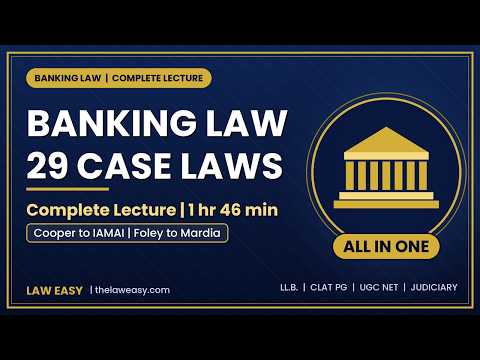
Banking Law Case 21 of 29 by Law Easy, for LL.B., CLAT PG, UGC NET Law and Judiciary exams. Case: Dashrath Rupsingh Rathod v State of Maharashtra (2014), Supreme Court of India (three-judge bench), decided 1 August 2014 (Justice Vikramajit Sen). BACKGROUND: For many years the Supreme Court allowed a cheque dishonour complaint to be filed wherever any one of the acts making up the offence took place, such as where the cheque was drawn, presented or returned, or where the notice was sent. Payees, often large companies, filed complaints in their own cities, and drawers had to travel across the country. LEGAL ISSUE: Which court has territorial jurisdiction to try a complaint under Section 138 of the Negotiable Instruments Act? JUDGMENT: The Supreme Court held that the offence is committed when the drawee bank returns the cheque unpaid, so the complaint can be tried only by the court within whose local jurisdiction the drawee bank branch is situated. The place where the payee presented the cheque, sent the notice or carried on business does not decide jurisdiction. The court directed that pending complaints be returned for filing in the proper court, except those in which, after the accused had appeared, the recording of evidence had already begun. PRINCIPLE TO REMEMBER: The complaint is filed by the payee or holder in due course under Section 142 within one month of the cause of action arising, and only a Metropolitan Magistrate or a Judicial Magistrate of the first class can try the offence. PROVISIONS: Sections 138 and 142 of the Negotiable Instruments Act, 1881. EXAM NOTE (current law): Parliament changed the territorial jurisdiction rule in 2015. Under Section 142(2) of the Negotiable Instruments Act, as amended, the court depends on whether the cheque was delivered for collection through an account or presented otherwise than through an account, and Section 142A was added. Dashrath is important as legal history, but applying its rule today without the amendment can send a complaint to the wrong court. Use the 2015 amendment for current exam answers. PLAYLIST (all 29 cases in order): https://www.youtube.com/playlist?list=PLbhYsrMKgACA COMPLETE LECTURE (all 29 cases with timestamps): https://youtu.be/ayAN7RLlfPM PREVIOUS CASE (20, Goaplast v Chico Ursula D'Souza): https://youtu.be/zQlYniTvC3c More law notes: https://www.thelaweasy.com If this helps your exam preparation, please subscribe to Law Easy. This video is for education and is not legal advice. #BankingLaw #ChequeBounce #Section138 #CLATPG #Judiciary #LLB #LawEasy

Notes

Notes on Banking Law

All notes on this subject
Banking Law Case compilation

Banking Law: 29 Important Case Laws

Question: Can the Government take over large banks and still be required to respect individual rights?

87 min read

Banking Law Complete notes

Banking Law: Complete Notes

Banking Law (the law and practice of banking in India) runs from why banks exist and why the law watches them so closely, to newer questions such as card frauds, online banking and FinTech. Behind every deposit, cheque, loan and online transfer lies a legal relationship governed by statutes…

106 min read

Practise 120 Banking Law MCQs Check what you have learnt with practice questions on this subject.

Video lectures

More on Banking Law

All lectures on this subject

Learn with video

Watch every lecture free on YouTube

Complete courses, landmark case explanations and quick Shorts from The Law Easy channel. Subscribe to get new lectures as soon as they are published.