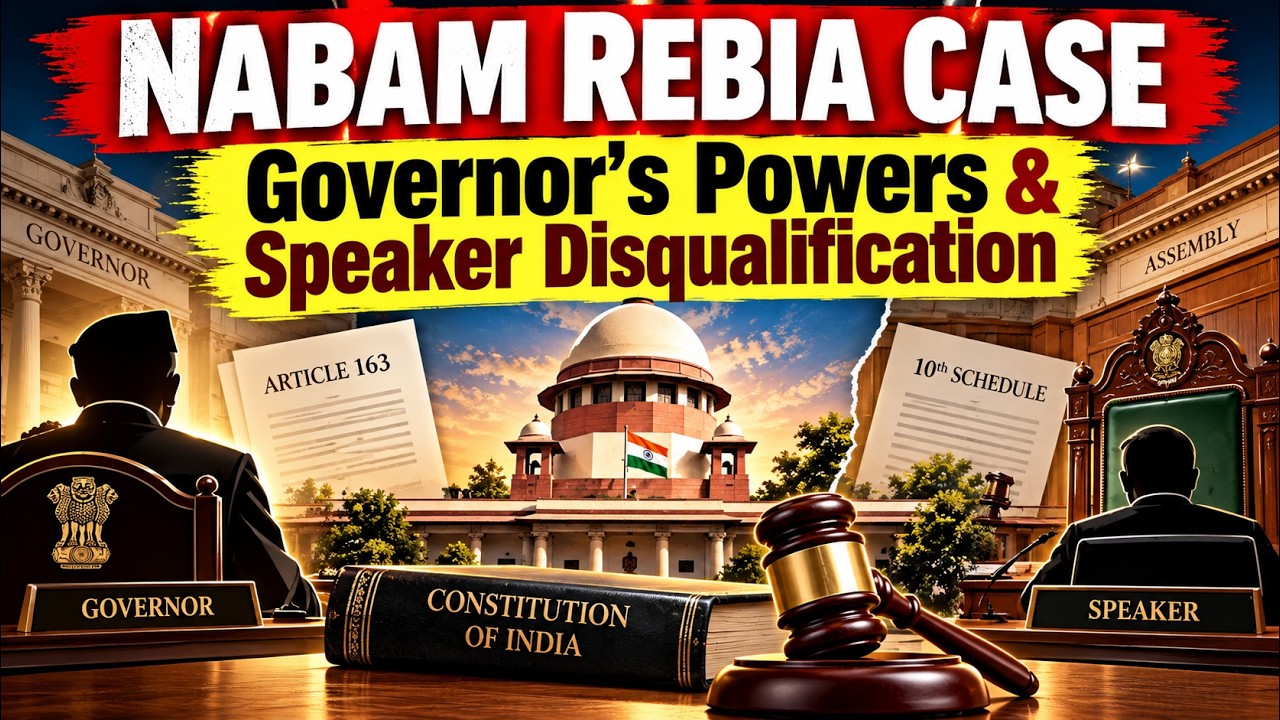
In this lecture, we examine the landmark Constitution Bench judgment in Nabam Rebia v. Deputy Speaker arising from the Arunachal Pradesh constitutional crisis. Understand the legal limits of the Governor's discretionary powers under Articles 163 and 174, the Speaker's disqualification powers under the Tenth Schedule during pending removal motions, and the Supreme Court's historic decision setting aside President's rule.
In this video you will learn:
• Understand the factual matrix of the 2015 Arunachal Pradesh political crisis
• Examine the scope of ministerial aid and advice under Article 163
• Analyze the limits of Governor's summoning powers under Article 174
• Learn the disability of the Speaker under the 10th Schedule during removal proceedings under Article 179(c)
• Review the grounds on which the Supreme Court set aside President's rule and restored the state government
Topics covered:
• Facts of the Arunachal Pradesh Political Crisis
• Constitutional Issues Framed by the Supreme Court
• Governor's Discretionary Powers under Article 163
• Summoning and Proroguing Legislative Assembly under Article 174
• Speaker's Disqualification Powers under Tenth Schedule
• Notice for Removal of Speaker under Article 179(c)
• Judicial Review of President's Rule and Restoration of State Government
Important case laws:
• Nabam Rebia v. Deputy Speaker
Statutory provisions discussed:
• 10th Schedule, Constitution of India
• Article 163, Constitution of India
• Article 174, Constitution of India
• Article 179(c), Constitution of India
Useful for: LL.B. (3-year and 5-year integrated), UGC NET Law, CLAT PG, University semester exams and Judiciary aspirants.
Chapters:
00:00 Arunachal Pradesh Crisis Facts
03:09 Issues Before the Supreme Court
05:18 Speaker Disqualification Power Under 10th Schedule
06:43 President Rule Setting Aside & Conclusion
Notes and study material:
https://www.thelaweasy.com
#ConstitutionalLaw #NabamRebia #TenthSchedule #IndianPolity #LawEasy