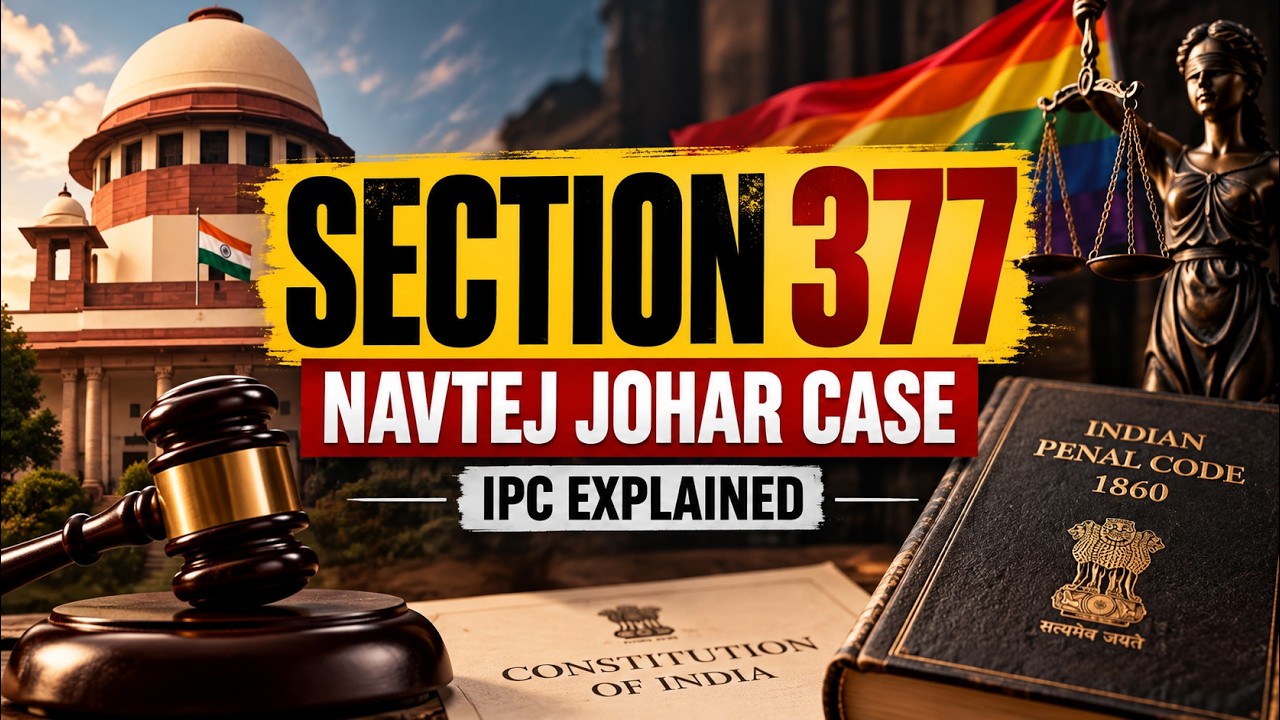
Study Section 377 of the Indian Penal Code, 1860 through its text, constitutional challenges and the transition to the Bharatiya Nyaya Sanhita, 2023. This Law Easy lecture explains consent, privacy, equality and constitutional morality for LL.B., UGC NET Law, CLAT PG and law university students.
📚 For Complete Law Notes, Visit:
https://www.thelaweasy.com
WHAT YOU WILL LEARN
• The historical wording, scope and punishment under Section 377 IPC.
• The legal journey from Naz Foundation to Suresh Kumar Koushal, Puttaswamy and Navtej Singh Johar.
• Articles 14, 15, 19 and 21: equality, sexual orientation, expression, privacy and dignity.
• Reading down a provision versus striking it down in full.
• The distinction between consensual adult intimacy and non-consensual acts.
• The BNS framework, its lack of a direct Section 377 equivalent and the protection gaps discussed in the lecture.
• BNS Sections 63, 64, 115 and 131; the Protection of Children from Sexual Offences Act, 2012; and Section 18 of the Transgender Persons (Protection of Rights) Act, 2019.
CASES DISCUSSED
Naz Foundation v. Government of NCT of Delhi (2009)
Suresh Kumar Koushal v. Naz Foundation (2013)
Justice K.S. Puttaswamy (Retd.) v. Union of India (2017)
Navtej Singh Johar v. Union of India (2018)
The lesson distinguishes the historical IPC provision from the BNS framework. Navtej read down Section 377 for consensual sexual conduct between adults; it did not invalidate the entire provision.
CHAPTERS
00:00 Three situations: consent and legal protection
00:44 Section 377: provision, scope and punishment
02:24 Naz Foundation and the 2009 decision
03:24 Suresh Kumar Koushal: the reversal
03:47 Puttaswamy and the right to privacy
04:09 Navtej Singh Johar: the 2018 ruling
04:46 Acts, identity and Article 14
05:32 Article 15 and sexual orientation
05:54 Minority rights and constitutional morality
07:06 Articles 19 and 21; limits of reading down
07:42 BNS and the protection gaps discussed
09:17 Proposed reform and legislative role
09:42 Quick case-law revision
WATCH NEXT
Gender and Law complete course:
https://www.youtube.com/watch?v=ilobAUxstpk
Grievous Hurt under BNS:
https://www.youtube.com/watch?v=V4r66gM4jSc
Subscribe to Law Easy for legal concepts, landmark judgments and structured exam revision. Revisit the three opening situations after the lecture to check your understanding.
#LawEasy #Section377 #ConstitutionalLaw #LLB #UGCNETLaw #CLATPG