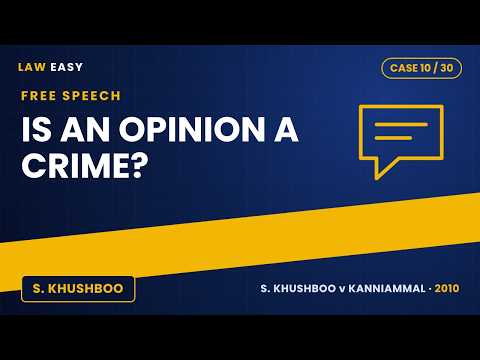
Case 14 of 30 in Law Easy's Media Law series. Subramanian Swamy v. Union of India, Supreme Court of India, decided 2016.
FACTS
Political leaders including Subramanian Swamy, who faced criminal defamation complaints, challenged Sections 499 and 500 of the Indian Penal Code. Many argued that jailing people for words is a colonial relic that chills free speech and that civil remedies are enough.
WHAT THE COURT HELD
In a judgment by Justice Dipak Misra, the Supreme Court upheld the provisions. Reputation is part of the right to life and dignity under Article 21, and 'defamation' in Article 19(2) includes criminal defamation. The two rights must be balanced, and the Court also relied on fraternity in the Preamble. It stressed that a magistrate must scrutinise a private complaint with great care before summoning anyone.
EXAM POINT
The offence now sits in the B.N.S., but a complaint must still meet its legal requirements.
PREVIOUS CASE: R. Rajagopal v. State of Tamil Nadu -
https://youtu.be/-CKKl9XviN8
NEXT CASE: Crop Care Federation of India v. Rajasthan Patrika -
https://youtu.be/bRsi6A2Nln0
FULL PLAYLIST (all 30 cases in order):
https://www.youtube.com/playlist?list=PLY-t71WbMh6k
COMPLETE LECTURE (all 30 cases, 1 hour 52 minutes):
https://youtu.be/8AFvktrLPM4
Made for LL.B. students and for CLAT PG, UGC NET Law and judiciary exam preparation. Subscribe to Law Easy for the full law course. Notes:
https://www.thelaweasy.com
#MediaLaw #Defamation #LawEasy